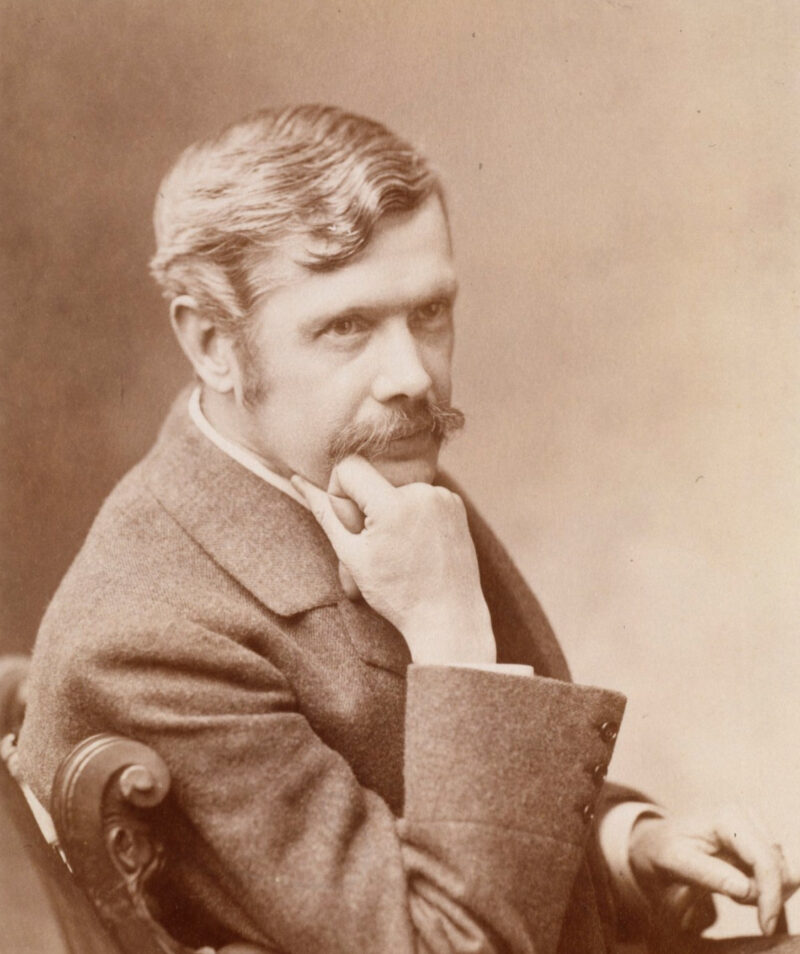
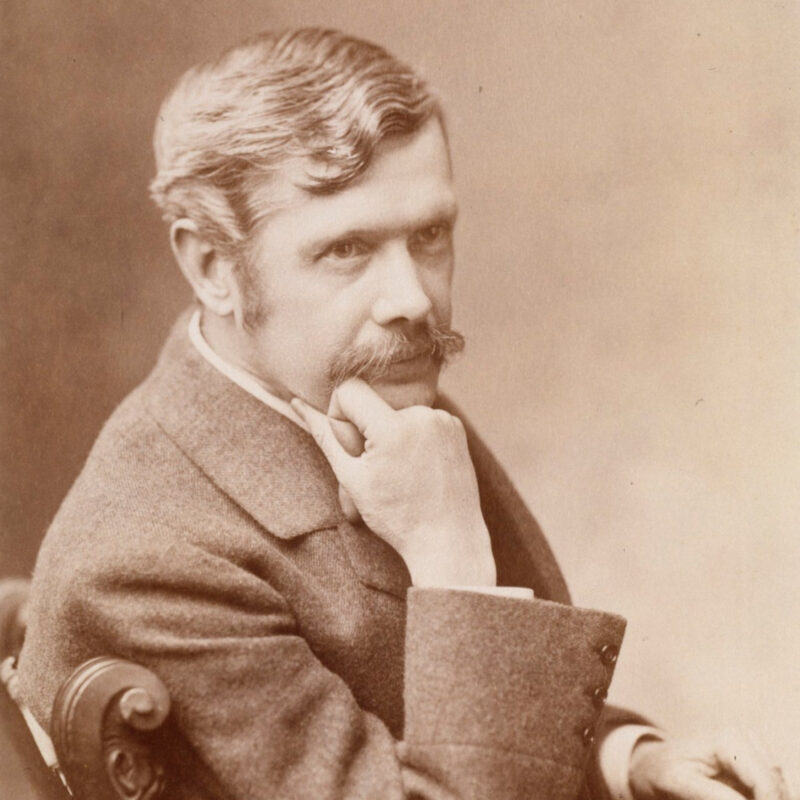
ALFRED EAST, 1844-1913
Alfred East is an English painter known for his lyrical and atmospheric landscapes, and a leading British artist between the late nineteenth and early twentieth centuries.
Self-taught in his early years, East developed an early focus on landscape and light effects, and was introduced slowly to the established London art scene. He regularly exhibited at the Royal Academy, where recognition consolidated his reputation as a sensitive interpreter of nature, capable of combining direct observation and poetic feeling.
As well as working across Europe, East made numerous trips to the Eastern Mediterranean and North Africa, coming into contact with environments, architecture and urban landscapes profoundly different from those of the West.
These encounters nurtured an interest in Orientalist themes and translated into bright and evocative pictures. In these, exoticism is never purely descriptive but is also filtered through a sensitive attention to light, warmth and atmosphere. Eastern lands thus become another field for visual experimentation, consistent with East’s interest in using landscape as an expression of emotional and contemplative experiences.
His trip to Japan strengthened his interest in formal synthesis, large chromatic surfaces and a more essential use of space. In 1910 East was elected President of the Royal Society of British Artists, in recognition of his central role in the artistic scene of the time.
On his death in 1913, he left a coherent and sophisticated body of work, in which the landscape becomes a place of contemplation, balance and dialogue between Eastern and Western traditions.