
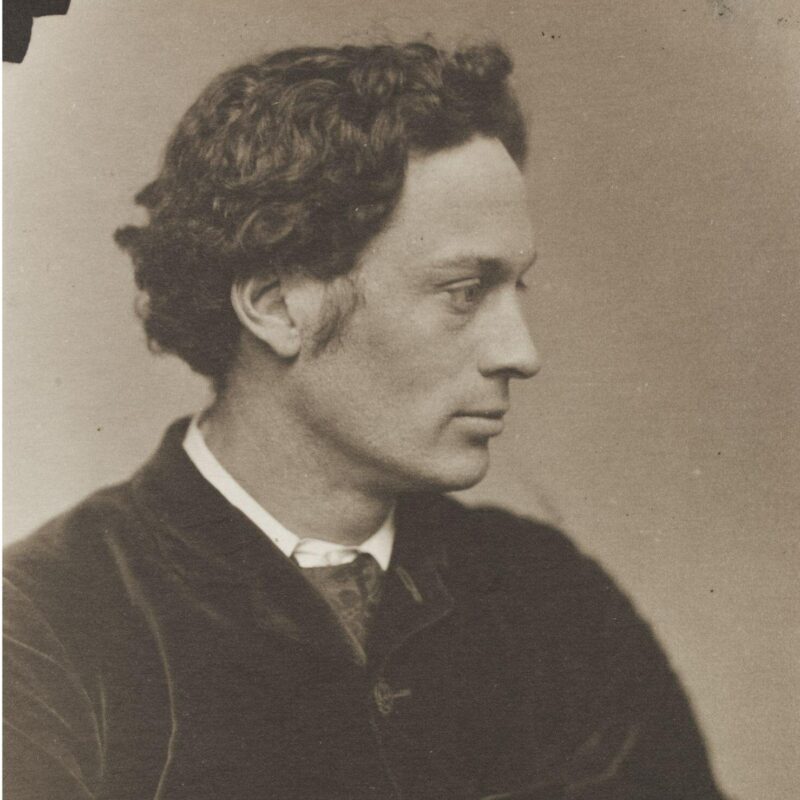
WILLIAM ARTHUR BENSON, 1854-1924
William Arthur Smith Benson was a leader of the British Arts & Crafts movement as designer, architect and theorist. He is best known for his innovative work in the field of metalwork and lighting.
The son of an army officer, Benson trained as an architect, but soon became disillusioned with industrial mass production and found himself drawn to the reformist ideas of William Morris. Convinced that design should combine functionality, beauty and craftsmanship, he established his own workshop in the 1880’s, specializing in the creation of handcrafted copper and brass objects.
Benson became famous for his lamps and candelabras, characterized by essential lines, hammered surfaces and a refined formal simplicity. His works represent a successful balance between formal rigour and aesthetic sensibility, embodying the Arts & Crafts principles of honest materials, structural clarity and a rejection of superfluous ornament. In this sense, his work anticipates some aspects of twentieth-century modern design.
Parallel to his artistic production, Benson gave careful thought to the social role of art and craft. He wrote essays and held conferences in which he argued for the need to restore dignity to manual work and to reform the relationship between design and production, opposing the dearth of quality in industrial standardization.
Throughout his career he collaborated with architects and institutions, and his works were exhibited in national and international exhibitions, thus contributing to the dissemination of the Arts & Crafts aesthetic.