
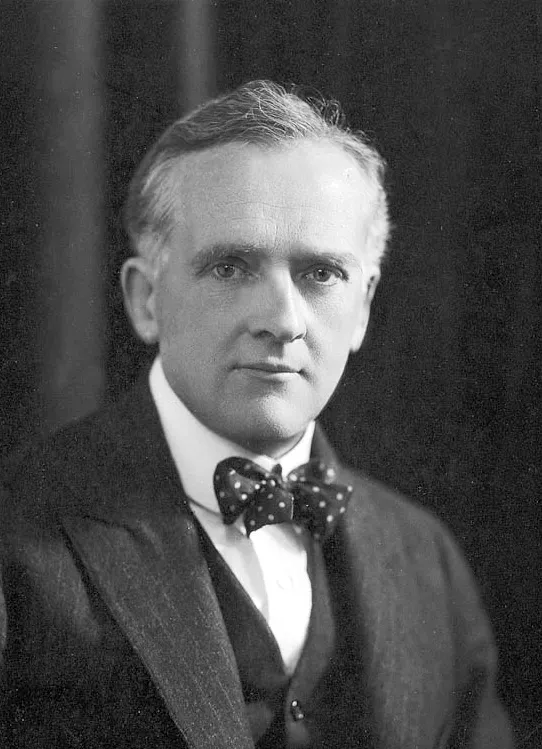
GILBERT BAYES (1872-1953)
Gilbert Bayes was a British sculptor whose long and prolific career spanned some of the most significant moments in English art between the late 19th and early 20th centuries, from Arts & Crafts to the New Sculpture Movement and Art Deco.
Trained at the Lambeth School of Art and later at the Royal Academy Schools, Bayes initially established himself in a context still linked to classical tradition but open to a renewal of plastic language. He was one of the protagonists of the New Sculpture movement, which introduced greater naturalism, movement and expressiveness into British sculpture, overcoming Victorian academic rigidity.
At the same time, Bayes developed a strong interest in the integration of art and craftsmanship, in line with the principles of Arts & Crafts. He worked with great versatility, using bronze, stone and, above all, ceramics, a material that allowed him a formal and chromatic freedom that was innovative for the sculpture of the time. His works range from mythological and allegorical figures to decorative and monumental subjects.
In the 1920s and 1930s, his style evolved towards more synthetic and modern forms, approaching the Art Deco aesthetic, characterised by simplified volumes, smooth surfaces and measured elegance. During this period, he created numerous public works, fountains and architectural sculptures, contributing significantly to the renewal of the British urban landscape.
