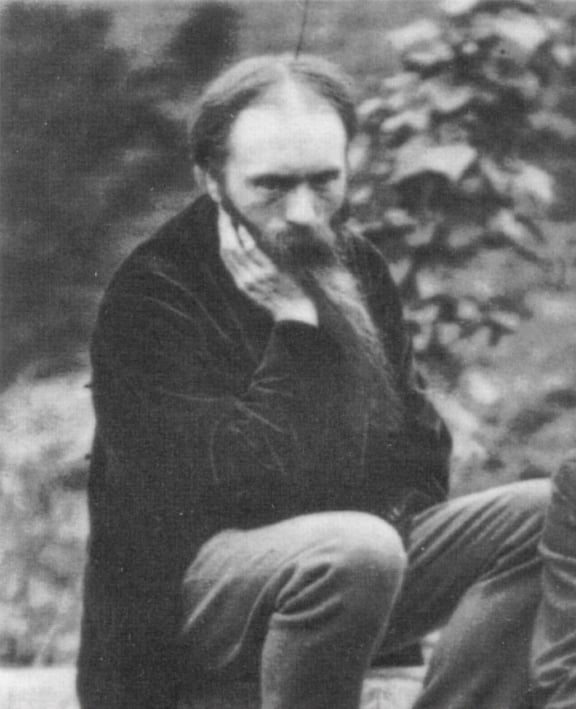

EDWARD BURNE JONES, 1833-1898
Edward Burne Jones (1833-1898) is one of the most important painters of 19th century England and his name is often associated with the Pre-Raphaelite movement.
Born in Birmingham in 1833, he attended King Edward’s School, where he met his long-term friend and colleague William Morris. He then studied theology at Exeter College, Oxford but left early to focus full-time on his art.
His meeting with Dante Gabriel Rossetti in 1856 marked a turning point for him, and led him to immerse himself in the world of the Pre-Raphaelites. Fascinated by the fine detailing and medieval narratives, he found his own distinctive artistic language. Burne-Jones’ range of artistic expression includes painting, stained glass, illustration and textile design.
Among his most famous works, masterpieces such as “ Beguiling Merlin” and “The Golden Stairs” embody a refined aesthetic and an emphasis on literary themes. His contribution to British art was recognized when he was elected to the Royal Academy in 1885 and was followed by his knighthood in 1894.
His death in 1898 left a void in the London art scene, but his legacy persisted. Jones is remembered as one of the giants of the Victorian period, whose impact extends far beyond his own lifetime, influencing generations of later artists. His works, in art collections around the world, testify to his extraordinary talent and enduring legacy in art and design.