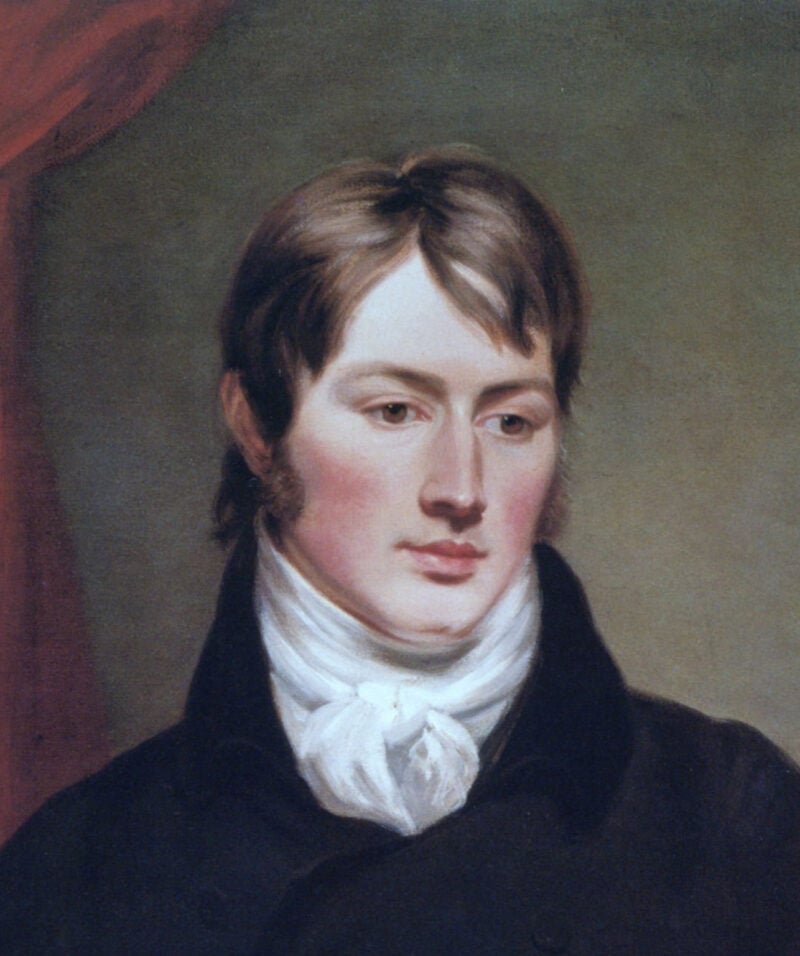
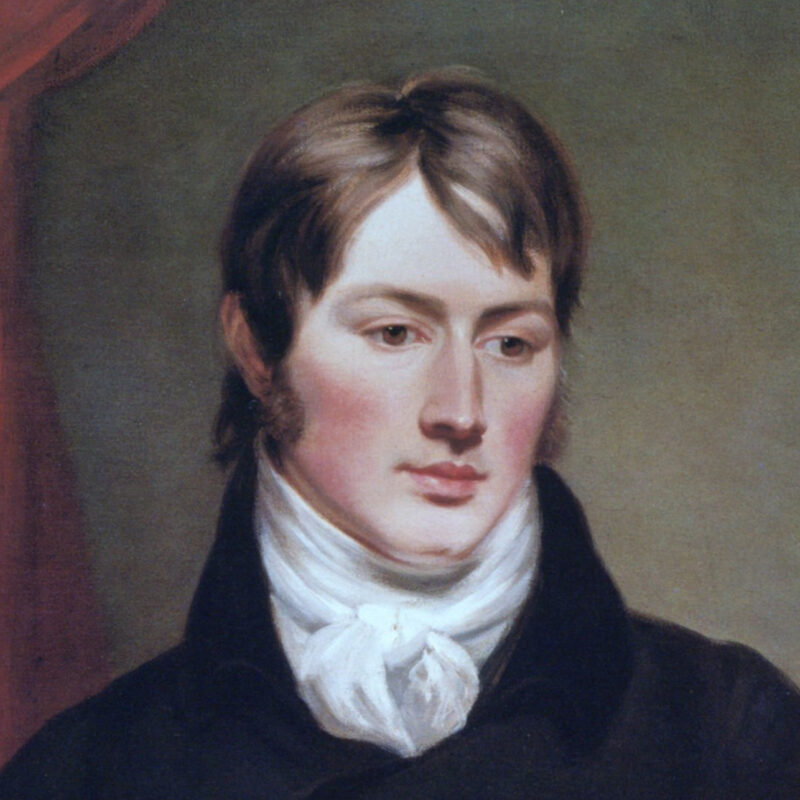
JOHN CONSTABLE, 1776-1837
John Constable is one of England’s greatest 19th century artists and a key figure of the Romantic movement. He is particularly well known for having profoundly reappraised landscape painting through a direct and sensitive observation of the natural world.
Born into a family of landowners and millers, Constable grew up immersed in the rural landscape of Suffolk, his art’s favourite subject. After an initial family disagreement over his career, he devoted himself to painting and trained at theRoyal Academy Schools in London. Here he studied the masters of European landscape but never lost his own very personal and contemporary way of seeing.
At the centre of his research is the idea of nature as a lived experience – a far cry from classical idealizations. Constable paints directly from life, creating numerous outdoor studies and experimenting with a free and vibrant painting technique. Particular attention is paid to the study of the sky and to atmospheric conditions, which he considered fundamental elements of landscapes’ emotional expressiveness.
Although initially poorly received in England, Constable gained important international recognition, especially in France, where his painting exerted a strong influence on Romantic artists and the future Barbizon school.
Painful personal experiences marked his late works which became more intense and dramatic, whilst still retaining close observation of nature. Upon his death in 1837, Constable left a decisive legacy articulated through a new conception of landscape painting as expressive of both emotion and truth thus paving the way for modern painting and Impressionism.
Ramsay Richard Reinagle, Portrait of John Constable, 1799, National Portrait Gallery, London.