PIERRE-ATHANASE CHAUVIN, 1774 –1832
Pierre-Athanase Chauvin was a French painter living through the transitional period between the end of the eighteenth century and the Napoleonic era. He is known above all for his landscape paintings and for his association with the artistic circle of Roman neoclassicism.
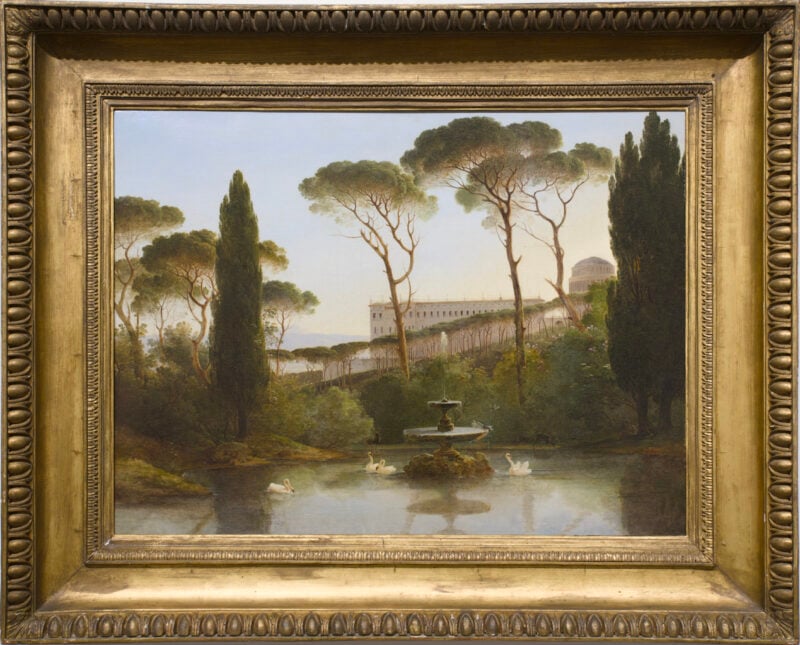
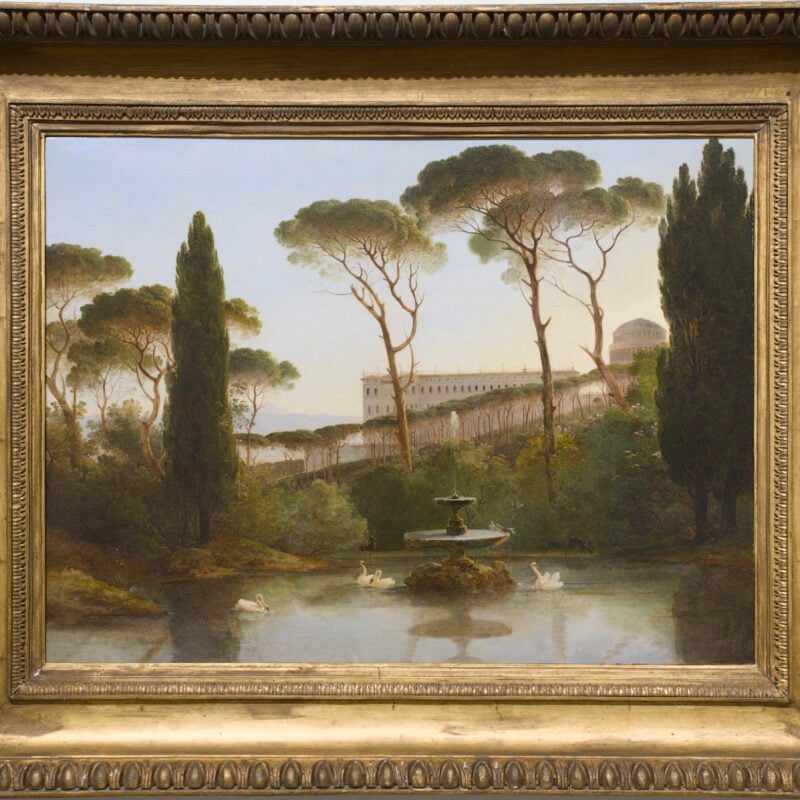
Trained in France during the Revolution, Chauvin initially practiced as a History painter, but he soon found in landscape painting his true interest. Typical of neoclassical sensibilities, he focuses on the representing nature as an orderly, harmonious space replete with moral values in an the idealised landscape.
After moving to Rome, he came into contact with its international artistic community, frequenting archaeological sites to study antiquity and developing the cult of the classical landscape. The Roman experience affected his style profoundly: the views of countryside, of ruins and of glimpses of Lazio are marked by compositional balance, luminous clarity and a careful rendering of the atmosphere – a world where nature becomes a place of contemplation and equilibrium.
Chauvin’s works speak a sober and meditative language, far from the excesses of nascent romanticism, but sensitive to the poetic dimension of the landscape. Painting becomes for him a instrument for reflecting on time, memory and the relationship between man and nature, often evoked through the discreet presence of ancient architecture or small sculptures.
Pierre-Athanase Chauvin spent the last years of his life in Rome, where he died in 1832. His work is an important witness to the cultural dialogue between France and Italy at the beginning of the nineteenth century, and it fits well into traditional neoclassical landscape as an expression of balance, order and contemplation.