
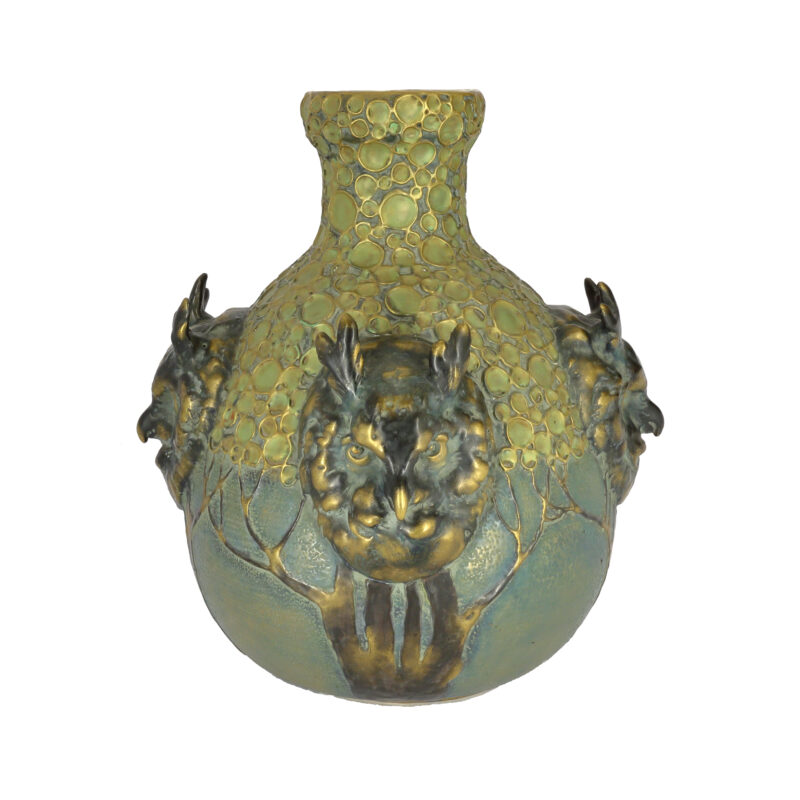
AMPHORA (MANUFACTURE)
The AMPHORA manufactory was founded in 1892 in Turn-Teplitz, then part of the Austro-Hungarian Empire and now known as Trnovany in the Czech Republic. The cultural and artistic context of fin de siècle Vienna marked an extraordinary moment of flourishing for the applied arts. The Amphora factory – set in Bohemia, an area already famous for its high quality clays and historic ceramic traditions – attracted entrepreneurs and ceramicists like Riessner, Stellmacher & Kessel .
From the start AMPHORA stood out for its sophisticated and experimental products and belonged to the Viennese Jugendstil (Art Nouveau) movement. It embraced fluid lines, naturalistic motifs, stylized female figures and richly textured surfaces – a clear break from nineteenth-century historicism. The manufactory collaborated with Secessionistartists and designers from Vienna and through its ceramics expressed an elegance and modernity combining artistry and craftsmanship.
Between the end of the nineteenth century and the first decades of the twentieth, AMPHORA experienced huge international success. exporting throughout Europe and the United States. The high technical quality, complexity of form and intense decorative force was much appreciated and sought after. Vases, sculptures and ornamental objects became symbols of a new, cultured and modern taste, establishing ceramics as its own proven art form.
With the changing historical context and the decline of Art Nouveau after the First World War, production declined to the point of closure. Nonetheless, the Viennese manufacture AMPHORA remains one of the highest points of artistic expression in ceramics. Today these works are preserved in museums and private collections the world over and represent a valuable testimony to the innovative and decorative spirit of Vienna at the beginning of the 20th century.